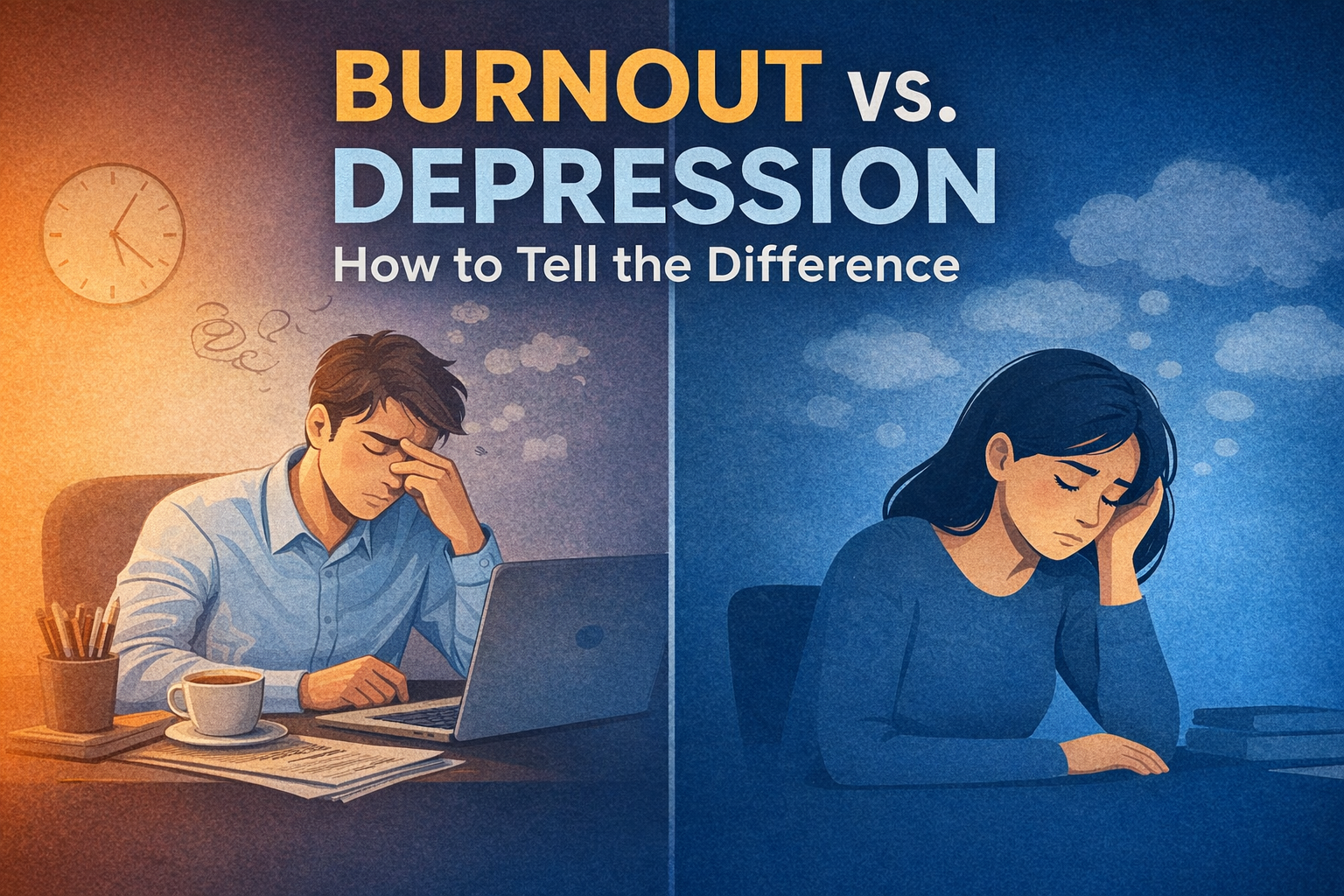

Burnout vs Depression: How to Tell the Difference
In today’s fast-paced American work culture, stress has become almost unavoidable. Long work hours, remote job pressures, financial stress, and digital overload have left many U.S. professionals feeling emotionally drained. But when does workplace burnout cross the line into clinical depression?
Although burnout and depression share overlapping symptoms like fatigue, low motivation, and difficulty concentrating, they are not the same condition. Understanding the difference is essential for protecting your mental health and knowing when to seek professional help.
According to the American Psychological Association (APA), workplace stress continues to be one of the top concerns for U.S. adults.
Source: https://www.apa.org/news/press/releases/stress
Let’s break down the key differences.
Also Read : Best 5-Minute Mindfulness Exercises for Office Workers
What Is Burnout?
Burnout is a state of chronic workplace stress that has not been successfully managed. The World Health Organization (WHO) classifies burnout as an occupational phenomenon rather than a medical diagnosis.
Burnout is especially common in industries like healthcare, tech, law, education, and corporate management — all major employment sectors in the United States.
Common Symptoms of Burnout:
- Emotional exhaustion
- Feeling drained after work
- Reduced productivity
- Cynicism about your job
- Irritability with coworkers
- Loss of motivation at work
The important distinction: burnout is usually tied specifically to your job. If you take a vacation or change your work environment, symptoms often improve.
Harvard Business Review discusses how burnout specifically affects workplace performance:
https://hbr.org/2019/12/burnout-is-about-your-workplace-not-your-people
What Is Depression?
Depression, particularly Major Depressive Disorder (MDD), is a medical mental health condition that affects your thoughts, feelings, and daily functioning.
According to the National Institute of Mental Health (NIMH), nearly 21 million U.S. adults experience at least one major depressive episode each year.
Source: https://www.nimh.nih.gov/health/statistics/major-depression
Common Symptoms of Depression:
- Persistent sadness or emptiness
- Loss of interest in hobbies
- Sleep disturbances
- Appetite changes
- Feelings of guilt or worthlessness
- Low energy even after rest
- Thoughts of death or suicide
Unlike burnout, depression impacts every area of life — not just work.
Read This –> The 90 Minute Rule: A Healthier Way to Work Smarter
Burnout vs Depression: The Key Differences
1. Cause
Burnout:
- Primarily caused by chronic workplace stress
- Often improves with rest or workload changes
Depression:
- May not have a specific cause
- Can be influenced by genetics, brain chemistry, trauma, or life stress
The Mayo Clinic explains that depression is a clinical condition requiring medical attention, not just rest.
https://www.mayoclinic.org/diseases-conditions/depression
2. Scope of Impact
Burnout mainly affects your professional life.
Depression affects:
- Work
- Family relationships
- Friendships
- Hobbies
- Personal self-worth
If your mood improves significantly on weekends or vacations, burnout is more likely.
If you feel low regardless of location or activity, depression may be involved.
3. Emotional Experience
Burnout often feels like:
- Frustration
- Overwhelm
- Emotional numbness related to work
Depression feels like:
- Deep sadness
- Hopelessness
- Persistent emptiness
The Centers for Disease Control and Prevention (CDC) outlines depression as a condition that lasts most of the day for at least two weeks.
https://www.cdc.gov/mentalhealth/depression
4. Physical Symptoms
Both burnout and depression can cause fatigue and sleep problems. However:
Burnout fatigue often improves with adequate rest.
Depression-related fatigue may persist even after sleeping.
Depression may also include:
- Chronic pain
- Headaches
- Digestive issues
Can Burnout Turn Into Depression?
Yes.
If left unmanaged, prolonged burnout can increase the risk of developing depression or anxiety disorders. Chronic stress impacts brain chemistry and cortisol levels, which can trigger more serious mental health conditions.
Research supported by the National Institutes of Health (NIH) shows that chronic stress changes brain structure and mood regulation.
https://www.nih.gov/news-events/nih-research-matters/stress-and-brain
This is why early intervention matters.
When to Seek Professional Help in Burnout vs Depression
You should consider speaking with a licensed professional if:
- Symptoms last more than two weeks
- You feel hopeless most days
- You withdraw socially
- You experience thoughts of self-harm
In the United States, immediate support is available:
988 Suicide & Crisis Lifeline
Call or text 988
https://988lifeline.org/
This service is confidential and free nationwide.
How to Recover from Burnout
If you determine that burnout is the issue, try these evidence-based strategies:
1. Set Work Boundaries
Limit after-hours emails and schedule breaks.
2. Take PTO Without Guilt
Time away from work helps reset stress levels.
3. Practice Stress-Reduction Techniques
Mindfulness, breathing exercises, and short walks can lower cortisol.
4. Speak With Your Employer
Discuss workload adjustments or flexible scheduling.
5. Improve Work-Life Balance
Protect time for hobbies, exercise, and family.
The CDC also recommends workplace wellness strategies to reduce job stress.
https://www.cdc.gov/workplacehealthpromotion
How Depression Is Treated
Depression usually requires medical or psychological treatment.
Common options include:
Therapy
Cognitive Behavioral Therapy (CBT) is widely used in the U.S.
Medication
Antidepressants may be prescribed by a psychiatrist.
Lifestyle Support
Exercise and sleep hygiene can support recovery but are not substitutes for treatment.
The American Psychiatric Association provides guidance on depression treatment:
https://www.psychiatry.org/patients-families/depression
Remote Work: A Growing Risk Factor
Remote work has blurred the boundaries between professional and personal life for many Americans.
Signs it’s burnout:
- You dread logging in
- You feel relief on weekends
Signs it’s depression:
- You feel emotionally numb even during personal time
- You withdraw socially
Recognizing the difference early can prevent long-term mental health consequences.
Final Thoughts
Burnout and depression may look similar on the surface, but they are fundamentally different conditions.
Burnout is work-related and often improves with rest and boundaries.
Depression is a medical condition affecting every part of your life and may require professional care.
If you’re unsure which you’re experiencing, speaking with a licensed healthcare provider can help you gain clarity.
Your mental health is not a weakness — it’s part of your overall well-being.
Check This also : Early Signs of Burnout at Work – Recognize & Prevent Employee Burnout in the USA